
I Visited 24 Amsterdam Coffee Shops as a Rolling Paper Manufacturer
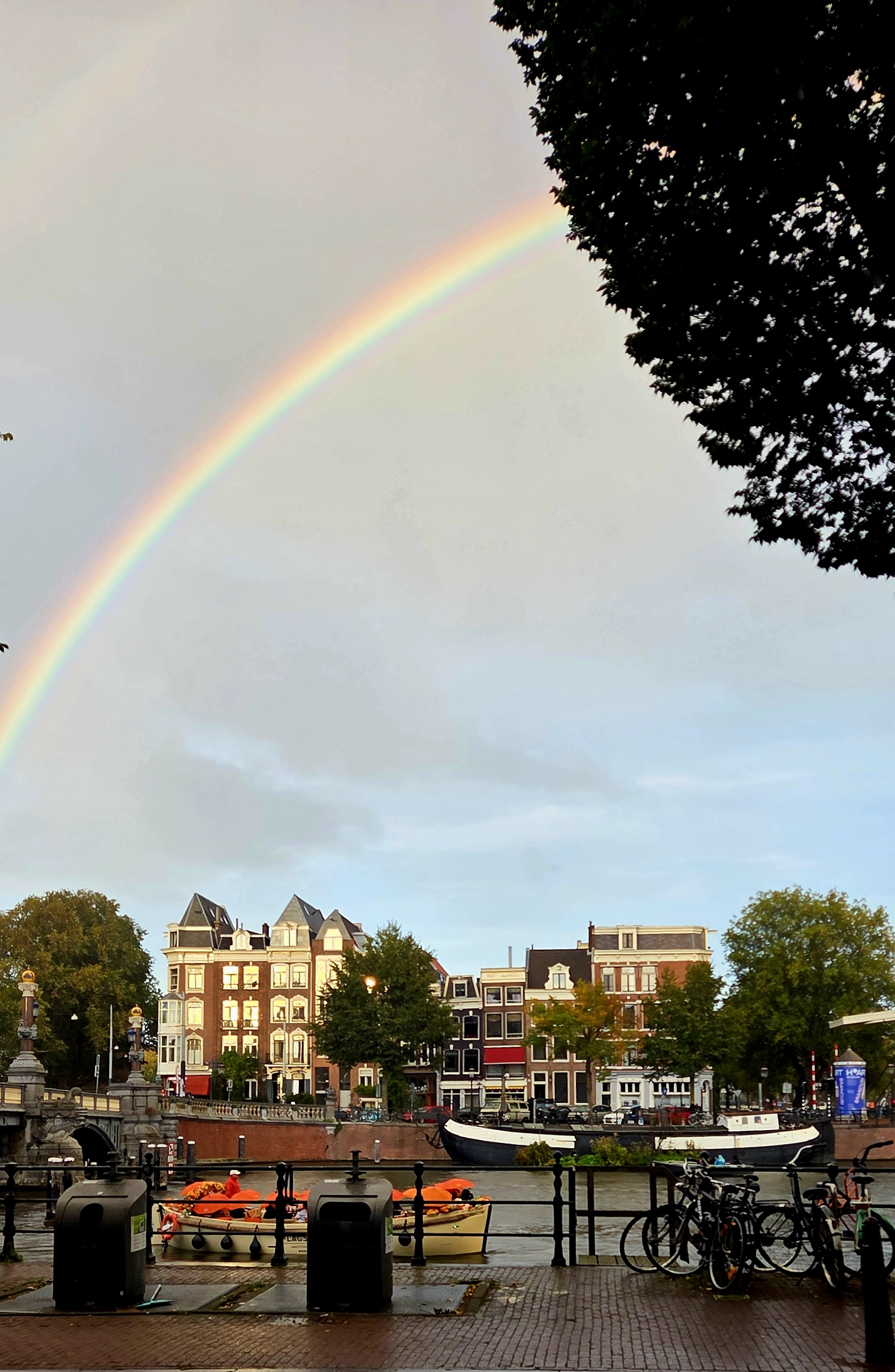
I woke up to a rainbow over Amsterdam.
Not a metaphor. An actual rainbow, arching wide over the canal outside my hotel window in Centrum, the old heart of the city, colours sharp against a sky that had just finished raining. I stood at that window for a while before I did anything else. Some mornings just ask you to stop.
I had come to Amsterdam not as a tourist. I had come as a manufacturer. Rolling papers are what we make at RYO Papers, thin, precise, carefully produced sheets that end up between someone's fingers in a coffee shop just like the ones I was about to spend the next several days walking through.
Twenty-four coffee shops later, I came home with a different understanding of this industry than any trade fair or catalogue had ever given me.
This is a rolling paper story from my perspectives.
Why Amsterdam? Why Now?
The global market for rolling papers is not just about smoking. It never really was. But standing inside Amsterdam's coffee shops, legally, openly, in a city that has built an entire culture around the ritual of rolling, you understand something that data sheets cannot tell you.
Rolling is a lifestyle. The paper is part of the experience.
For us at RYO Papers, that insight changes everything. We manufacture rolling papers on flexo machines running 12 to 38 GSM, serving buyers across the world. But understanding where our paper ends up, and who holds it, and why they care, that required a trip to the source.
Amsterdam in September 2025 was that source.
The Two Worlds Inside Amsterdam's Coffee Shops
Before I name names, here is the most important thing I learned: Amsterdam's coffee shop world is split in two.
The tourist-facing shops are clustered around Centrum, brightly lit, English menus, Instagram-ready interiors, staff who answer every question in three languages. These are the ones that show up on every travel blog. They serve a function. They are not the full story.
The local-first shops are harder to find. Tucked into residential neighbourhoods, sometimes unmarked on Google Maps, frequented by the same people every single week. Their owners know their customers by name. Their product selection reflects genuine local preference, not what a weekend visitor will reach for.
I visited both worlds. And I am glad I did.
The 24 Coffee Shops: A Manufacturer's Field Notes
The Bulldog: The Original, Still Standing
You cannot visit Amsterdam without walking past The Bulldog. I walked in, and got to meet Hank, the owner, which was a genuine highlight. What struck me about The Bulldog beyond that conversation was the sheer operational scale, the throughput of customers, the speed of transactions, the efficiency of a shop that has been doing this longer than most. For a paper manufacturer, this is the mass-market end of the spectrum. Volume, consistency, and brand recognition drive every decision here.
Coffeeshop Katzu: Where I Felt at Home
If one coffee shop defined this trip for me, it was Katzu.
The moment I walked in, the atmosphere shifted. Quieter. More considered. Isabella, a member of the team, was the kind of person who makes you feel like a regular on your first visit, warm, genuinely interested, unhurried. When I mentioned what I do, that I manufacture rolling papers, her eyes lit up with curiosity rather than indifference.
We spoke about quality. About paper feel. About what their customers notice and what they don't. She appreciated what we have built at RYO Papers, though she was honest: purchasing decisions sit with the owners, not the staff. A distribution reality I have encountered everywhere in this industry. But the conversation confirmed something important, quality is noticed at the counter level, even when it is decided in the back office.
For anyone who asks me which Amsterdam coffee shop to visit, I say Katzu. Not for the product. For the people.
Coffeeshop Club Media, Coffeeshop Carmona, Coffeeshop Balboa
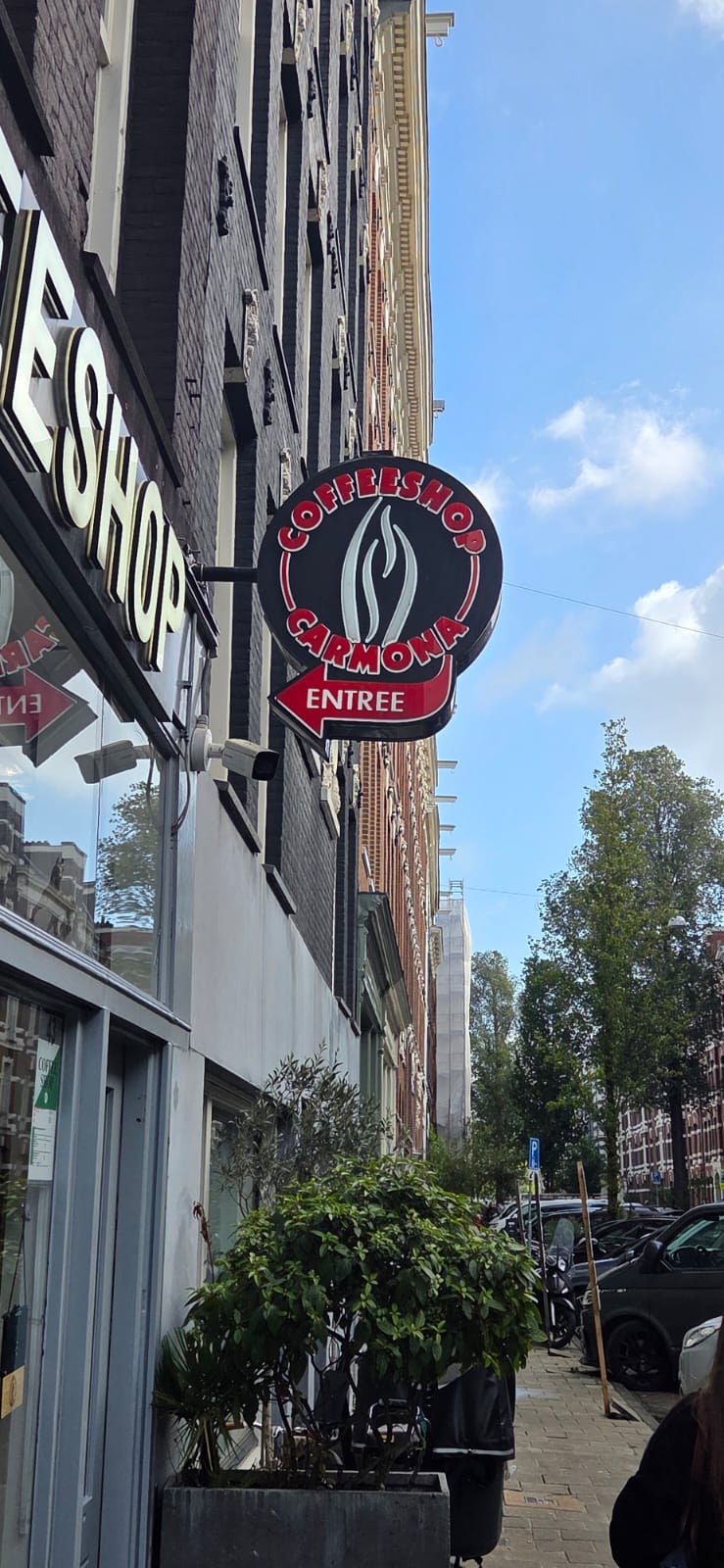 These three sit in a different register, curated, design-conscious, deliberate about atmosphere. Rolling papers here are not an afterthought; they are part of a considered product environment. Customers tend to be regulars. The energy is unhurried.
Coffeeshop New Times, Tatanka, Inner Space
New Times had a no-nonsense energy, functional, local-leaning, efficient. Tatanka surprised me with its character. Inner Space lived up to its name: the kind of place where people settle in, roll slowly, and stay a while. For a paper manufacturer, Inner Space represents the segment where paper quality matters most, these are considered rollers, not casual ones.
Papillon, Plugin, Utopia, Coffeeshop Bluesea
Papillon felt almost residential, a neighbourhood shop doing steady, quiet business. Plugin and Utopia were the more modern entries on my list, with a younger clientele and a willingness to try new things. Bluesea had a warmth to it, a slightly tropical incongruity in this Dutch city, that made it genuinely memorable.
Warde, Roots: The Local Heart
These two were among the most genuinely local shops I visited. Warde had the feel of a place that belongs to a neighbourhood, not performing for anyone, just doing its job day after day for the same community of people.
Roots had an honesty to it. Stripped of tourist gloss, focused entirely on the regulars who rely on it.
Amnesia: A Name That Earns Its Legacy
One of Amsterdam's legendary names. Amnesia carries the weight of history and you feel it the moment you walk in. The clientele is knowing, people who have made choices rather than defaulted to the nearest option. Walking through here as someone who manufactures the paper that gets used in places like this was quietly surreal.
The Old Church, The Family First
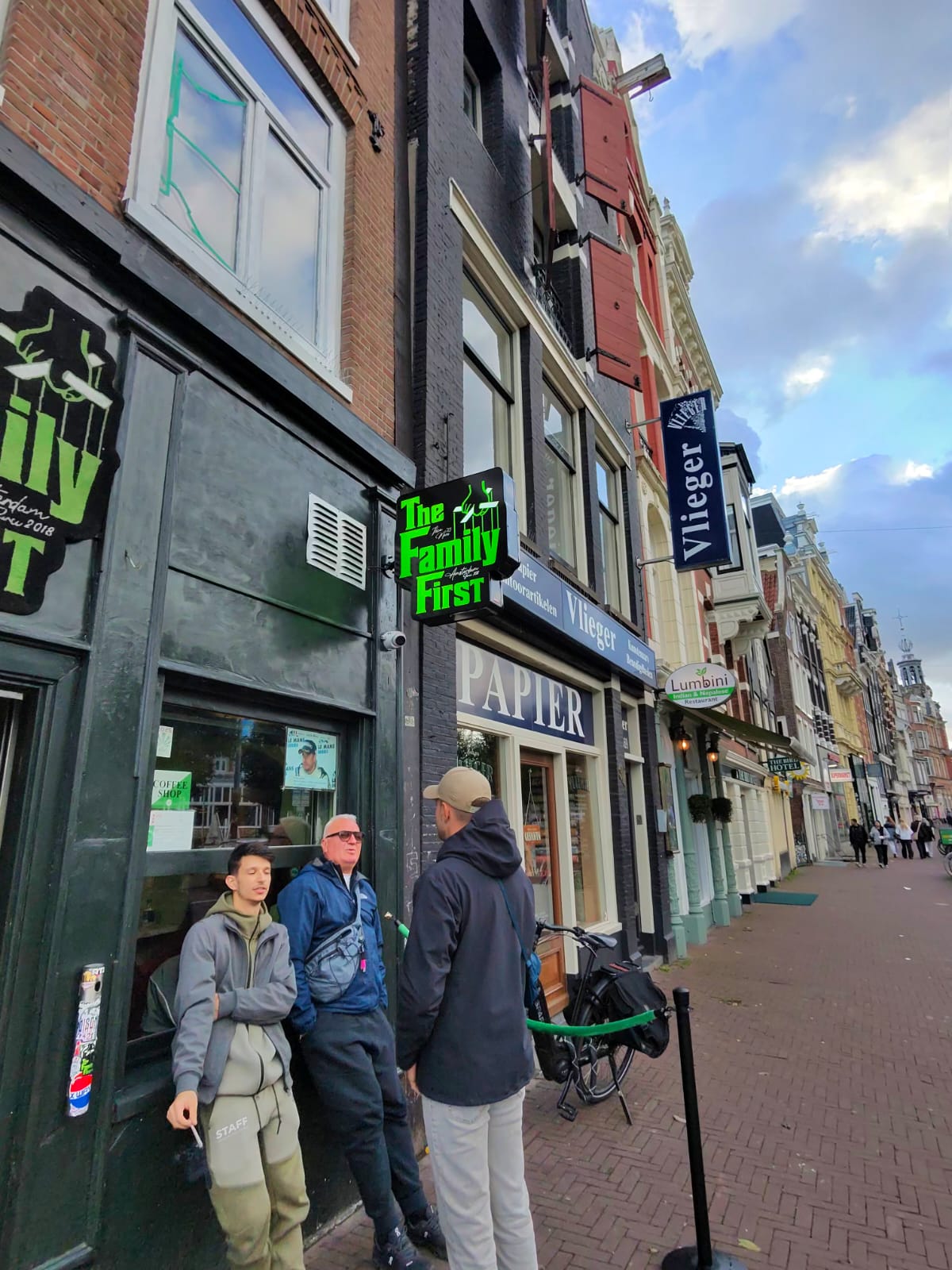
Perhaps the most striking contrast of the trip: a coffee shop steps from the Oude Kerk, Amsterdam's oldest building, sitting in the middle of the red-light district with a matter-of-fact openness that is quintessentially Dutch. The Family First had a different kind of intimacy, the name says it all, a neighbourhood operation with a genuine community feel.
Balou, Smokey Paulo, Greenhouse, Superfly
Balou was relaxed, slightly off the beaten track, the kind of discovery that rewards wandering. Smokey Paulo had character: a name that sounds like a story, and a shop that mostly delivers on it. Greenhouse runs a small chain with consistent quality and a loyal following. Superfly leaned into its name with an easy, unforced coolness.
Boerejongens: The Professional Standard
If I had to pick one shop as the benchmark for professional operation, it would be Boerejongens. A multi-location setup run with obvious care. Product curation is serious. Staff know their inventory. Walking through Boerejongens as a manufacturer felt like visiting a well-run pharmacy, everything in its place, everything considered.
Grey Area: Small Room, Large Reputation
Two Americans, a tiny room, a global reputation built over decades. Grey Area is entirely deserved. There is something about a genuinely small operation with outsized quality that resonates everywhere in the world. It reminded me that in this industry, reputation is built one roll at a time, not one campaign at a time.
Paradox: The Soul of Jordaan
Paradox, tucked into the Jordaan, feels like it has been there forever and should be there forever. It has the pace of the neighbourhood it serves, canal-side, unhurried, deeply local. The customers at Paradox are not in a rush. They are there to be somewhere, not just to consume something.
What the Papers Told Me
Across all 24 shops, two paper formats dominated without contest: King Size and 1¼.
King Size for the longer, fuller roll. 1¼ for those who want control without excess. These are not arbitrary measurements, they reflect how people actually roll, which reflects how people actually want to consume. Seeing this consistently across tourist shops and local-first shops alike tells me something important: the format preference is cultural and habitual, not just demographic.
The dominant brand I encountered across multiple shops: Mascotte. A European staple. Reliable, well-distributed, trusted by shop owners who have been ordering the same product for years.
What that tells me as a manufacturer: the barrier to entry is not quality, it is relationship and reliability. When a shop owner has been ordering Mascotte for ten years and it has never let them down, the question for a challenger is not can you make a better paper? The question is can you be as reliable, and what do you offer that they cannot?
At RYO Papers, our answer is custom, branded rolling papers, private label, OEM production. The ability to put a coffee shop's own name on their papers. That is a conversation no commodity supplier can open.
The Real Insight: This Is Medical and Lifestyle, Not Just Smoking
The deepest lesson from Amsterdam had nothing to do with paper sizes or brand stocking decisions.
It was this: the best coffee shops in Amsterdam do not think of themselves as selling a product. They think of themselves as serving a community.
In Amsterdam's mature, regulated market, cannabis sits alongside wellness conversations. Customers ask about effects, about strains, about what suits their needs on a given day. Staff respond like knowledgeable consultants, not shop assistants. The framing is medical and lifestyle. The experience is considered.
Most of the shops I visited that felt truly alive were not the touristy ones on the main drag. They were the ones hidden in plain sight, known by locals, sustained by regulars, invisible to the weekend visitor who does not know where to look.
This matters enormously for anyone manufacturing inputs into this market. If the product being rolled is a lifestyle and medical product, then the paper that wraps it must meet the same standard. It cannot be an afterthought. It must be clean, consistent, and worthy of the experience it completes.
At RYO Papers, this is exactly the conversation we are building with our buyers. Our papers are not generic. They are produced to specifications that respect the product they carry.
A Note on Distribution: How Decisions Actually Get Made
One honest observation from my conversations across multiple shops: staff notice quality. Owners control purchasing.
This is the distribution reality of the Amsterdam coffee shop market, and of most retail markets worldwide. A warm conversation with Isabella at Katzu, an appreciative comment from a counter team member at another shop, these are signals, not conversions. The path to a buyer runs through the owner, often through a distributor, and always through sustained reliability over time.
This trip was not a sales trip. It was a research and relationship trip. Understanding the ecosystem, where decisions live, what criteria matter, which shops operate with real commercial sophistication versus which are purely neighbourhood institutions, that intelligence shapes how we approach this market.
If you are a coffee shop owner in Amsterdam or anywhere in Europe, and you are interested in custom-branded rolling papers, I am one message away.
What I Brought Back
A rainbow over a canal. Twenty-four coffee shops in my notebook. A clearer, more honest picture of the market I have chosen to serve.
The rolling paper industry at the consumer end, inside Amsterdam's coffee shops, is more nuanced than it appears from the manufacturing side. It is built on trust, on regularity, on the invisible infrastructure of reliable supply. Breaking into it requires patience, genuine quality, and the right product conversation started at the right level.
There is no shortcut. There is only showing up, to 24 coffee shops, to honest conversations, to markets that have been served the same brand for a decade, and being more reliable, more interesting, and more committed than what came before.
That rainbow on the first morning felt like a good omen. The 24 coffee shops that followed gave it meaning.
About the Author
AJ is the founder of RYO Papers, manufacturers of rolling papers under the RYO Papers brand. RYO Papers produces King Size, 1¼, and custom-specification rolling papers across a 12 to 38 GSM range, available for private label, OEM, and wholesale export worldwide.
For inquiries: Connect on LinkedIn or WhatsApp for samples and pricing.